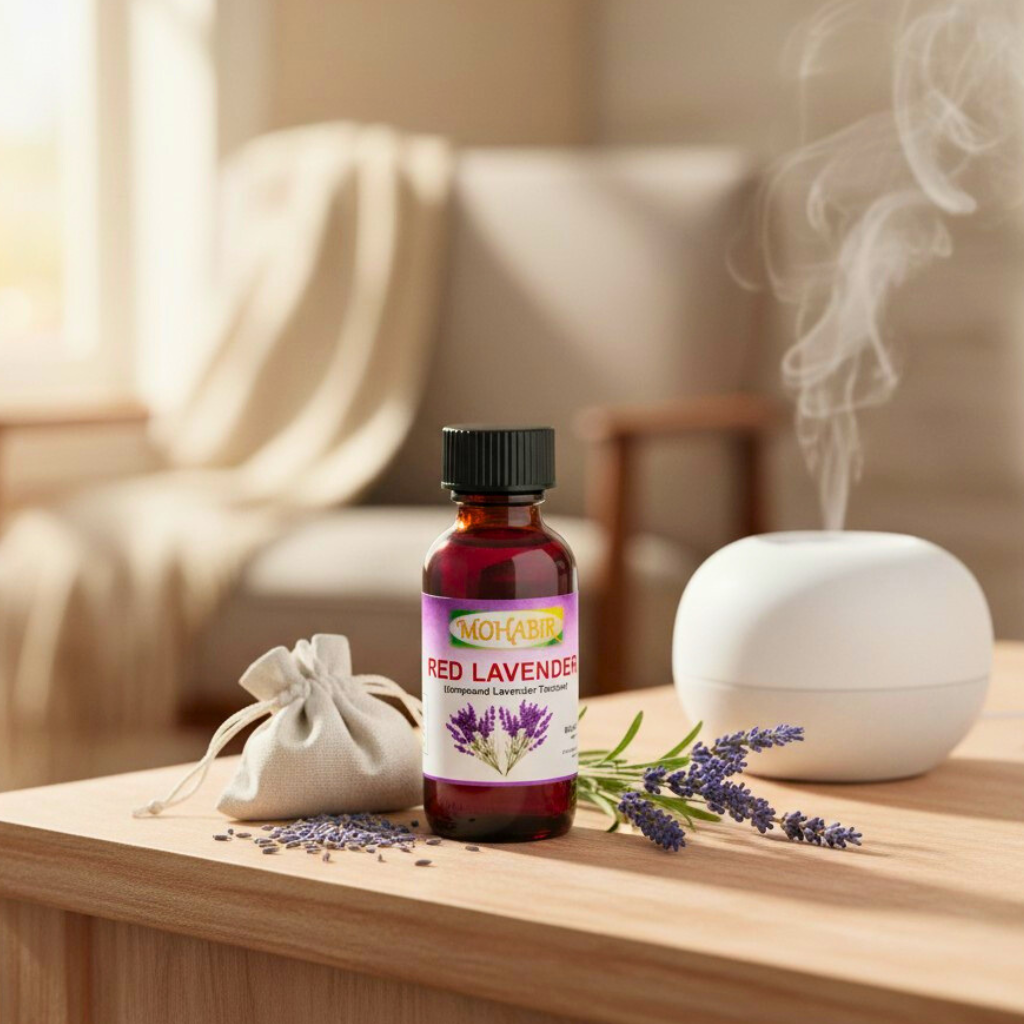
Mohabir
Red Lavender
Red Lavender
Couldn't load pickup availability
In the Caribbean, Red Lavender (Heliotropium indicum) is a cousin to White Lavender, often distinguished by its reddish-purple stems and more robust, deep-green leaves. Known as "Erysipelas Plant" or "Scorpion Tail" in some regions, it is a wild-harvested herb central to traditional Guyanese and West Indian "Bush" medicine. Unlike the ornamental purple lavender found in temperate climates, this is a tropical botanical prized for its potent internal and external wellness properties.
Flavor Profile Red Lavender has a bold, earthy, and slightly bitter flavor profile. It lacks any floral or sweet notes, tasting more like a strong, dark herbal tea with a vegetal finish that reflects its wild, mineral-rich origins.
Typical Use It is primarily used to create strong herbal decoctions or concentrated washes. Because of its potency, it is often boiled rather than steeped to extract the deep red pigments and active tannins from the stems and leaves.
Cultural Use & Recipes
-
The "Cooling" Wash: Culturally, Red Lavender is famous for its topical use. The leaves are boiled to create a dark liquid used as a skin wash or compress to "draw out heat" from skin irritations or rashes (traditionally associated with conditions like erysipelas).
-
Internal Tonic: It is used as a traditional "blood cleanser." A common preparation involves boiling a small bundle of the herb in 3 cups of water for 10 minutes. The resulting tea is usually taken in small doses, often unsweetened, to support digestive health.
-
Spiritual Bath: In many Caribbean households, Red Lavender is added to "spiritual baths" to provide a sense of protection and energetic clearing for the home or individual.
Share